

What Is Solar Street Lighting & How It Works
A solar street lighting system operates as a self contained unit. Each light includes a solar panel, rechargeable batteries, LED lamps and a control system. During daylight hours, the solar panel converts sunlight into electrical energy and stores it in the batteries. At night, the stored energy powers the LED lamps according to programmed operating modes. Unlike grid lighting, solar street lights do not rely on external power supply or cabling. Performance depends on system design, including panel size, battery capacity, LED efficiency and control logic. These factors determine runtime, brightness and long term reliability.Advantages Of Solar Street Lighting
Solar street lighting offers several benefits that make it attractive for specific environments and project types, particularly where grid access is limited or costly.
Reduced Energy Consumption & Operating Costs
One of the primary advantages of solar street lighting is reduced energy consumption. Because the system operates independently from grid lighting, there are no ongoing electricity costs. For councils managing large lighting networks, this can significantly reduce long term operating expenses.
Over the life of the installation, the absence of power bills helps offset higher upfront product costs. This is particularly relevant for new developments and areas where grid connection charges would otherwise be high.
Simplified Installation & Lower Infrastructure Costs
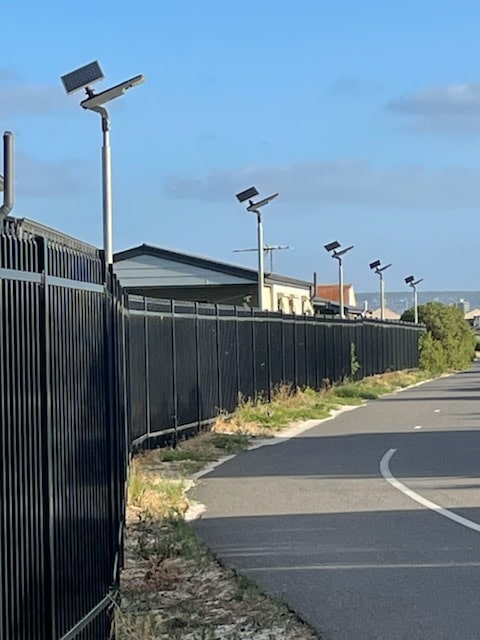
Solar street lights do not require trenching, cabling or connection to existing electrical infrastructure. This simplifies installation and reduces civil works, labour time and project disruption. In many cases, installation can be completed faster than traditional street lights, particularly in established environments where excavation is undesirable.
Lower infrastructure requirements can result in meaningful savings on total installed cost, even when the product itself has a higher initial price.
Environmental Impact & Sustainability Benefits
Solar street lighting reduces reliance on grid lighting and lowers overall energy demand. When designed correctly, this contributes to reduced environmental impact and supports sustainability targets for councils and developers.
While solar street lights are often described as eco friendly, it is important to consider component quality and lifespan. Systems designed for long term durability deliver greater environmental benefit than low cost products with short service life.
Suitable Applications & Use Cases
Solar street lights perform well in a wide range of applications. These include local roads, residential estates, car parks, pathways, parks and remote or off grid locations. They are particularly effective where grid lighting is unavailable, unreliable or expensive to install.
In these environments, solar street lighting offers reliable lighting without the complexity of electrical infrastructure upgrades.
Disadvantages Of Solar Street Lighting
Despite their advantages, solar street lights also have limitations that must be considered during specification and planning.
Performance Limitations & Reliability Considerations
Solar street lighting performance depends on sunlight availability. Extended periods of cloud, shading or poor panel orientation can reduce charging and impact nighttime operation. In winter or low sunlight areas, reduced daylight hours can limit runtime if systems are not properly designed.
Reliability is closely tied to system quality. Undersized panels, low capacity batteries or poor control systems increase the risk of inconsistent lighting performance.
Battery Dependence, Lifespan & Maintenance Requirements
Batteries are a critical component of solar street lights and also one of the main maintenance considerations. Over time, battery capacity degrades, reducing available runtime. Most systems require battery replacement as part of long term maintenance planning.
While maintenance requirements are generally lower than grid lighting, they are not zero. Asset owners must account for battery replacement cycles and periodic inspections to maintain reliable lighting.
Higher Upfront Product Costs Compared To Grid Lighting
Quality solar street lighting systems typically have higher upfront product costs than traditional street lights. This can be a barrier for some projects, particularly when budgets focus on initial capital expenditure rather than whole of life cost.
However, higher quality systems often deliver better performance, longer lifespan and lower maintenance costs, making upfront price only one part of the overall evaluation.
Suitability Limitations For Major Roads & Highways
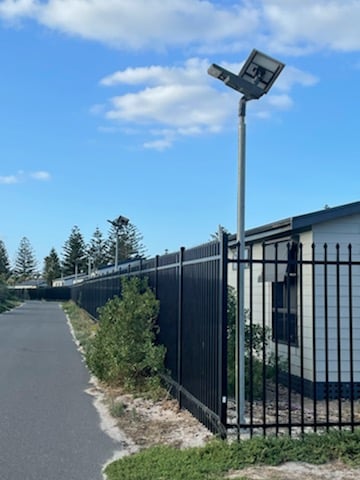
Solar street lights are not always suitable for highways or high traffic roads. These environments often require consistent high output, redundancy and compliance with strict lighting standards. Grid lighting may be more appropriate where uninterrupted performance is critical and power infrastructure is already in place.
Solar street lighting is generally better suited to secondary roads, local streets and areas with lower traffic volumes.
Solar Street Lights Vs Grid Lighting
When comparing solar street lights vs grid lighting, the decision depends on location, performance requirements and total project cost. Benefits include independence from the grid, lower energy consumption and simplified installation. Grid lighting provides consistent output and is less affected by environmental conditions.
Both options have a place in modern lighting design. The key is matching the technology to the application rather than treating one as a universal solution.

Key Considerations For Solar Vs Grid Street Lighting
When councils, engineers and contractors assess the lighting requirements for a project, the decision often comes down to more than upfront cost or energy savings. The following considerations play an important role in determining suitability and long term performance.
- Compliance and lighting standards: Meeting required lighting categories and standards varies by application, and some environments demand higher consistency and redundancy.
- Reliability and risk tolerance: Grid lighting offers predictable output backed by network infrastructure, while solar systems rely entirely on local storage and design margins.
- Future upgrades and scope change: Grid lighting can often be upgraded by changing luminaires, whereas solar systems may require panel and battery upgrades if performance requirements increase.
- Installation complexity and site conditions: Solar lighting avoids trenching but depends heavily on correct positioning, orientation and access to sunlight.
- Asset management and monitoring: Some solar systems include monitoring capabilities, while others rely on manual inspections, which affects long term maintenance planning.
- Lifecycle cost predictability: Solar lighting reduces energy costs but introduces battery replacement cycles, while grid lighting has ongoing power costs with simpler component replacement.
How S-tech Approaches Solar Lighting Solutions
S-tech approaches commercial solar lighting with a focus on performance, reliability and suitability for Australian conditions. System design prioritises correct panel sizing, battery capacity and LED efficiency to ensure consistent operation across varying weather conditions.
By focusing on component quality and real world performance rather than minimum specifications, S-tech supports LED lighting solutions that deliver long term value for councils and commercial projects.
Frequently Asked Questions
Are solar street lights reliable in all weather conditions?
Solar street lights can operate reliably in a wide range of conditions when systems are properly designed. Extended cloud cover or shading can reduce performance if panel and battery capacity are not sufficient.
Do solar street lights work in winter or low sunlight areas?
Yes, but performance depends on system design. Larger panels and higher capacity batteries are required to maintain runtime during shorter daylight hours.
How long do solar street lights last?
High quality solar street lights can operate for many years. Batteries typically require replacement as part of long term maintenance, while LED lamps have a much longer service life.
Are solar street lights cheaper than traditional street lights?
Upfront costs are usually higher for solar street lights. Over time, lower energy consumption and reduced infrastructure costs can make them more cost effective.
What maintenance does solar street lighting require?
Maintenance is generally limited to inspections and battery replacement over time. Regular cleaning of the solar panels is also important, as dirt, dust and debris can reduce energy capture and affect battery charging efficiency. Periodic checks help ensure consistent performance and long term reliability.
Can solar LED street lights replace grid powered street lighting?
In some applications, yes. Solar street lights are well suited to local roads and remote areas but may not replace grid lighting in all environments.
Are solar street lights suitable for highways and main roads?
Solar street lights are typically not recommended for highways. Grid lighting is often more suitable where consistent high output and redundancy are required.