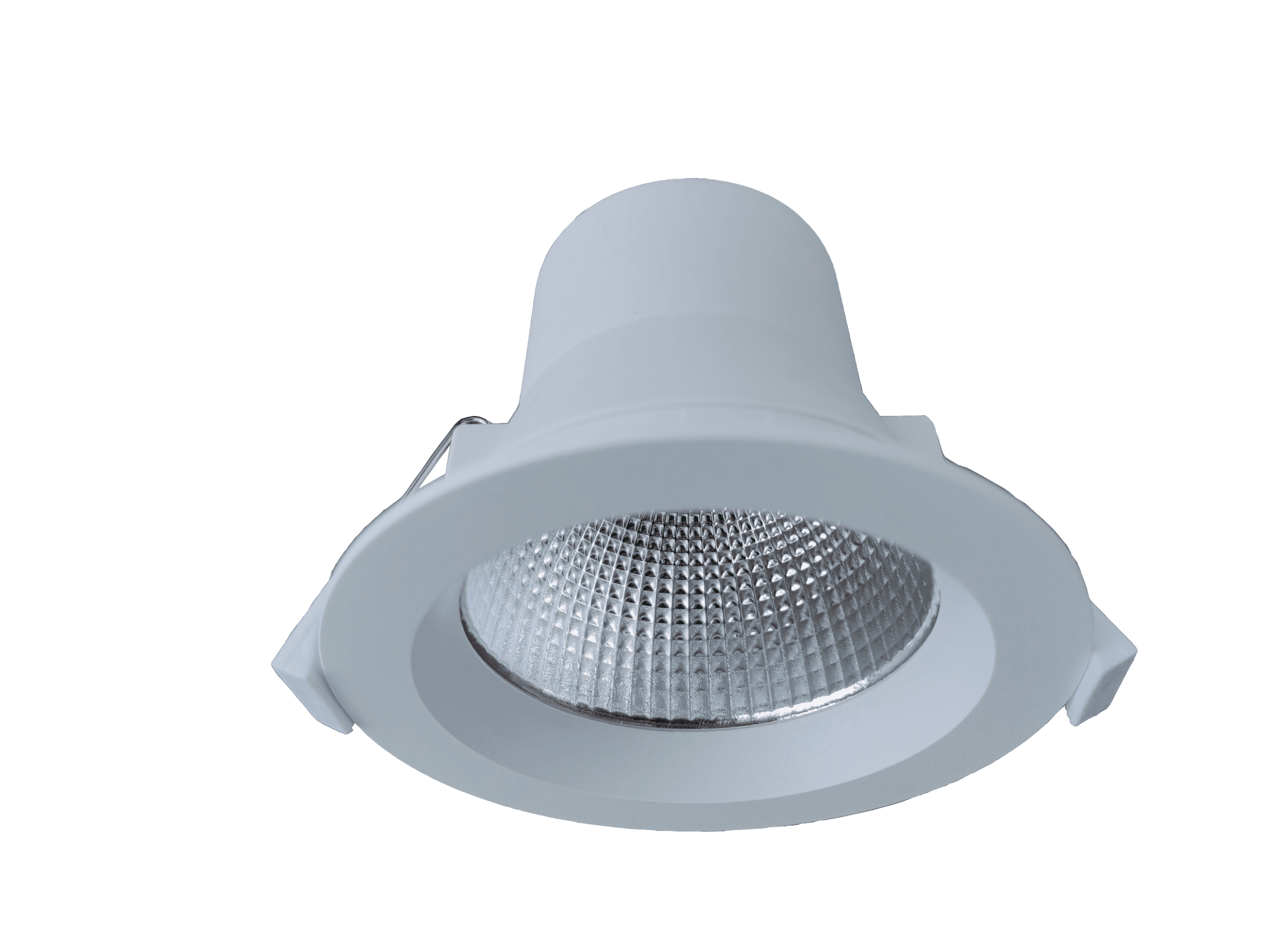
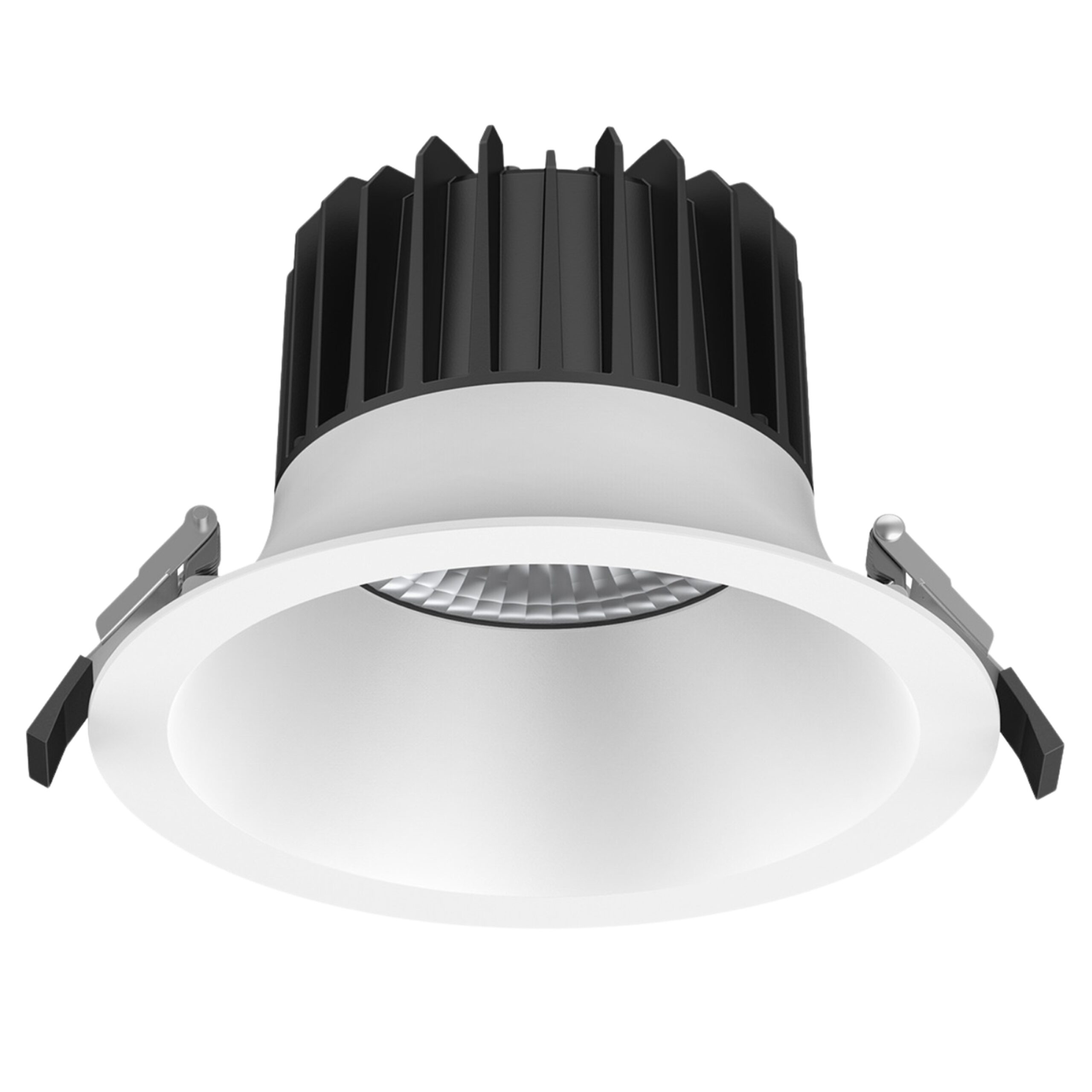
LED Downlights Designed for Visual Comfort
Not all downlights are equal when it comes to the quality of light they produce. Standard recessed downlights can create uncomfortable levels of brightness in the direct line of sight, particularly in spaces where people are seated, working at screens, or spending extended periods of time. Low glare downlights are designed to address this by controlling the intensity and spread of light leaving the fitting.
Our low glare downlight range is supplied for commercial and residential projects where visual comfort, reduced eye strain, and a high quality lighting environment are priorities.
Why Glare Matters in Commercial and Residential Lighting
Glare occurs when a light source is significantly brighter than the surrounding environment, causing discomfort and reducing visibility rather than improving it. In office environments, glare from ceiling downlights can interfere with screen visibility and concentration. In retail and hospitality spaces, excessive brightness from fittings can detract from the overall atmosphere and comfort of the space.
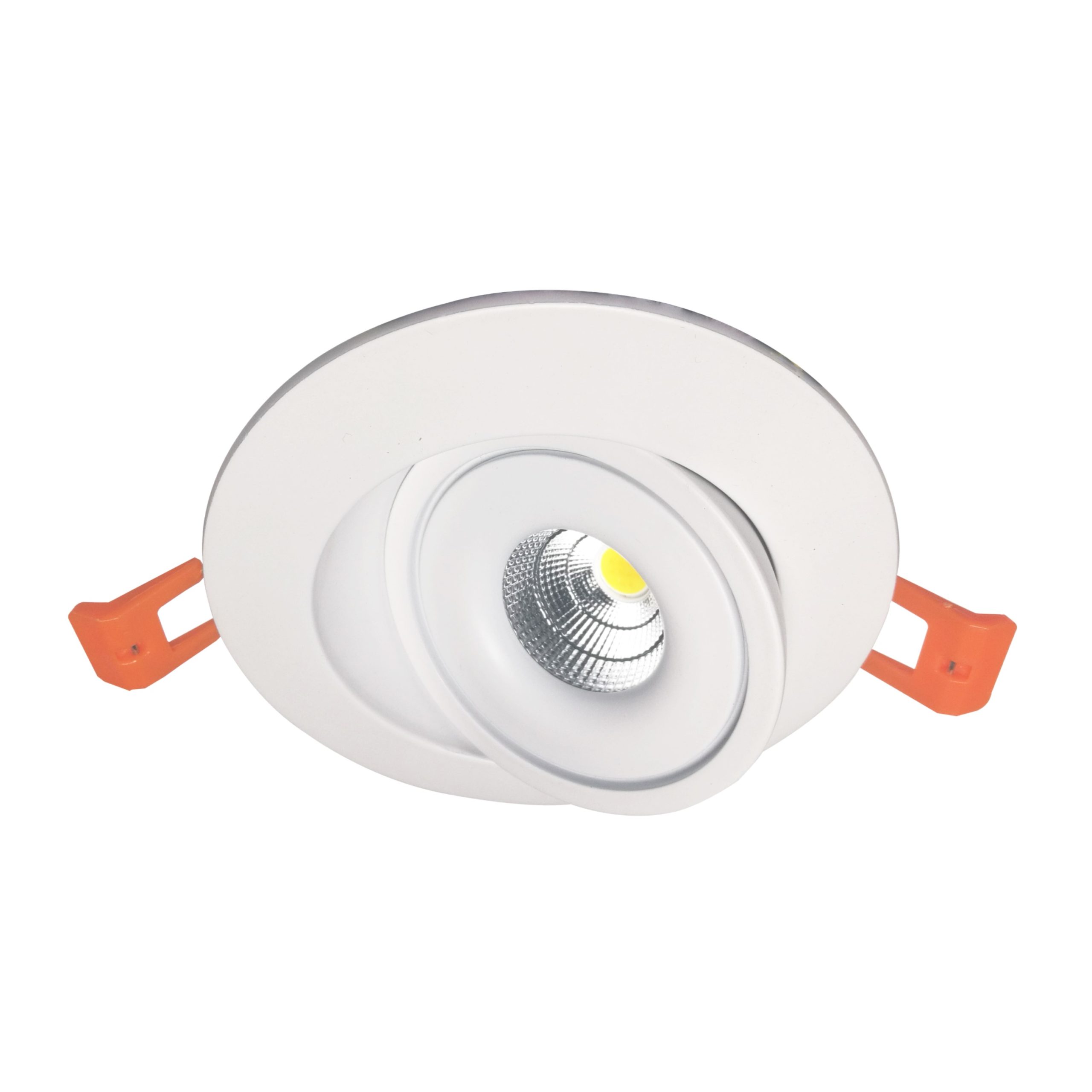
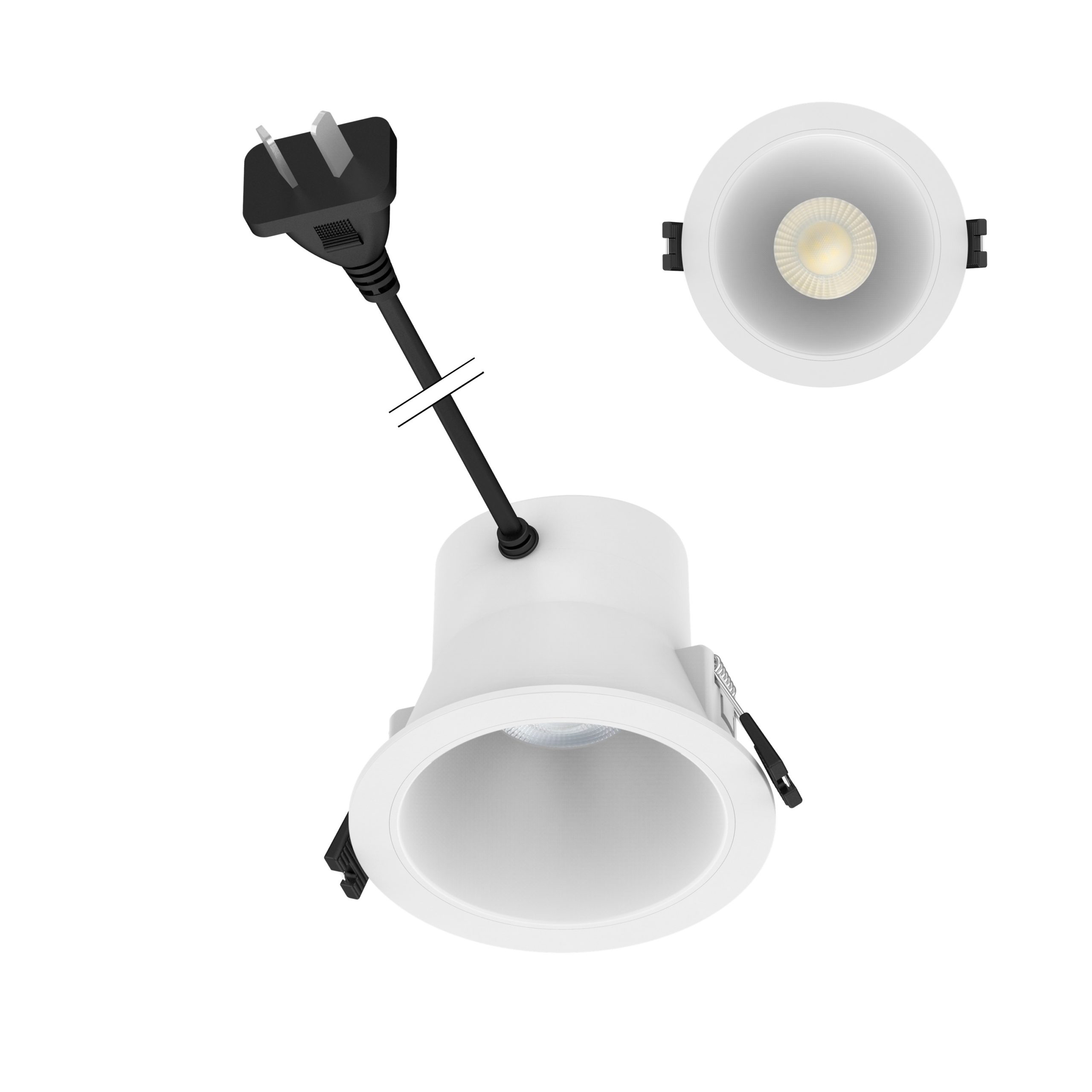
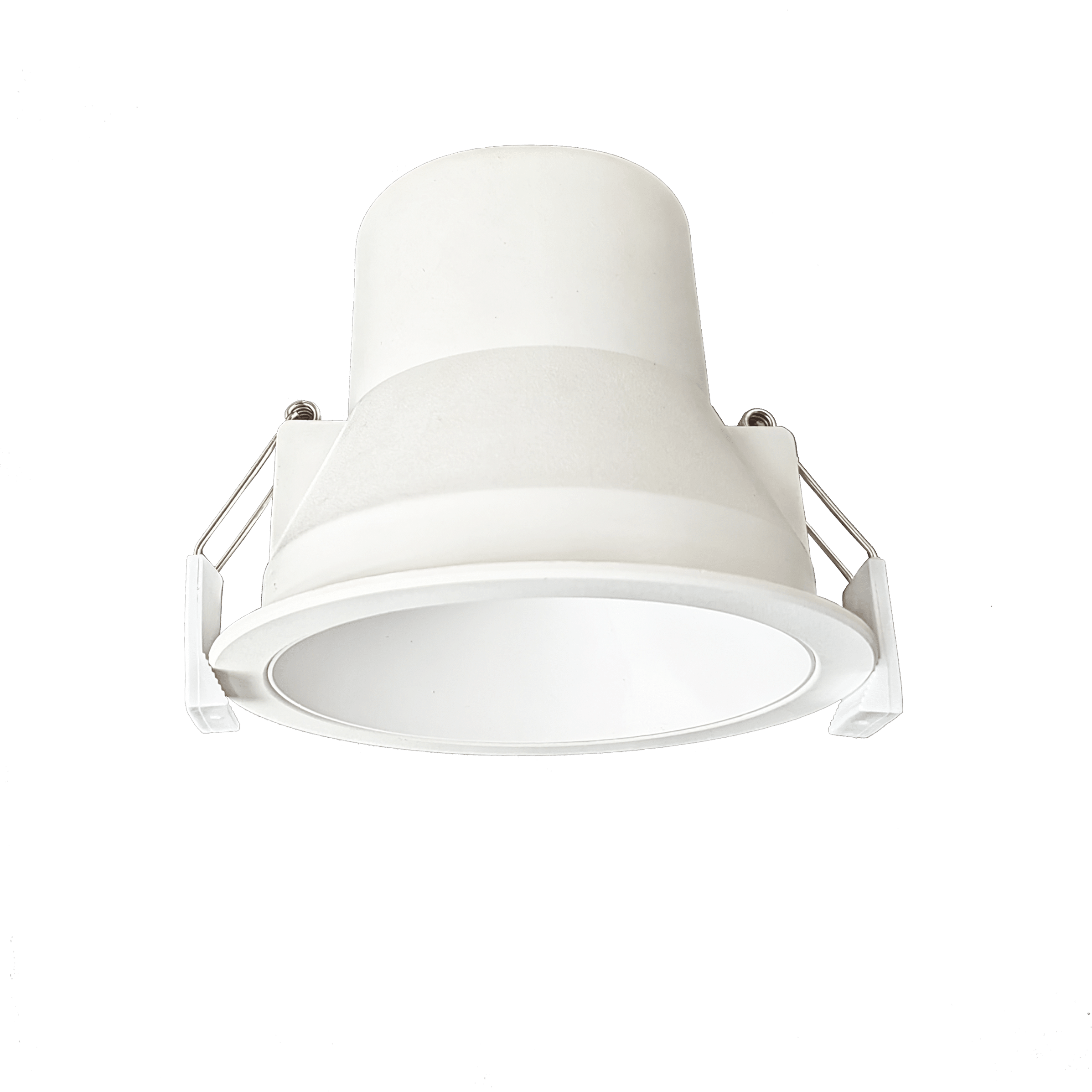
Low glare downlights use design features such as deep baffle housings, anti glare trims, and diffused light outputs to reduce the amount of direct brightness visible from the fitting. The result is a softer, more uniform illumination that improves comfort without compromising on light levels.
Key benefits of low glare lighting include:
- reduced eye strain in task and work environments
- improved visual comfort for occupants spending extended time in a space
- better screen visibility in office and meeting room settings
- a higher quality lighting environment in hospitality and retail fitouts
- compliance with glare requirements for commercial office specifications
Common Applications for Low Glare Downlights
Low glare downlights are commonly specified in environments where occupant comfort and lighting quality are part of the brief:
- commercial offices and open plan workspaces
- meeting rooms and boardrooms
- education facilities and libraries
- healthcare environments and consulting rooms
- hospitality venues and hotel rooms
- residential living areas and bedrooms
- retail fitouts where ambient lighting quality matters
In office environments particularly, specifying low glare fittings can make a meaningful difference to how a space feels and functions over the course of a working day.
Supporting Projects Across Australia
S-tech supplies low glare downlights for commercial and residential projects across Australia, supporting electrical wholesalers and contractors working on fitouts, new builds, and lighting upgrades where visual comfort and lighting quality are key considerations.
Partner with S-tech for Low Glare Downlights
Low glare downlights provide a straightforward way to improve the quality of a lighting installation without changing the overall layout or adding complexity to the design. By controlling brightness and reducing direct glare, these fittings help create spaces that are more comfortable and functional for the people using them.
S-tech has been supplying quality LED lighting solutions across Australia for over 2 decades. Our team works closely with electrical wholesalers and contractors to ensure the right products are specified for every project.
FAQs
Low glare downlights use design features such as deep baffle housings, recessed light sources, anti glare trims, and diffused optics to reduce the intensity of direct brightness visible from the fitting. These features limit the amount of light that escapes at wide angles, which is where glare is most likely to cause discomfort.
Low glare downlights are recommended in any environment where occupants spend extended periods of time, particularly offices, meeting rooms, education facilities, healthcare spaces, and hospitality venues. They are also well suited to residential living areas and bedrooms where a comfortable, relaxed lighting environment is preferred.
UGR stands for Unified Glare Rating, which is a measure of the glare discomfort produced by a lighting installation. A lower UGR value indicates less glare. Commercial office and education specifications often require fittings with a UGR of 19 or below to ensure an acceptable level of visual comfort for occupants.