Selecting the right industrial or commercial light fitting starts with one question: what is the ceiling height? It sounds straightforward, but it is one of the most common specification errors contractors and electricians encounter on site. Using the wrong fitting for the mounting height affects light distribution, lumen output at floor level, energy efficiency and the overall quality of the installation.
High bay and low bay LED fixtures are not interchangeable. They are engineered for different ceiling heights, with different beam angles, lumen outputs and optical designs to match. Understanding the difference between high bay and low bay lights is essential for specifying the right product and avoiding rework.
What Is The Difference Between High Bay & Low Bay Lights?
The terms high bay and low bay refer to the mounting height a fitting is designed for, and the optical performance required at that height.
High bay lights are designed for ceiling heights typically above 6 metres. Because the fitting is further from the floor, it needs higher lumen output and a more controlled beam angle to deliver sufficient light intensity at working level.
Low bay lights are designed for ceiling heights below 6 metres, generally in the range of 3 to 6 metres. At lower mounting heights, a wider beam angle provides better coverage and lighting uniformity without creating glare or hotspots.
The distinction is not just about mounting height. It also determines beam angle, LED driver specification, thermal management requirements and the type of optical lens or reflector used.
High Bay Lighting Height Requirements
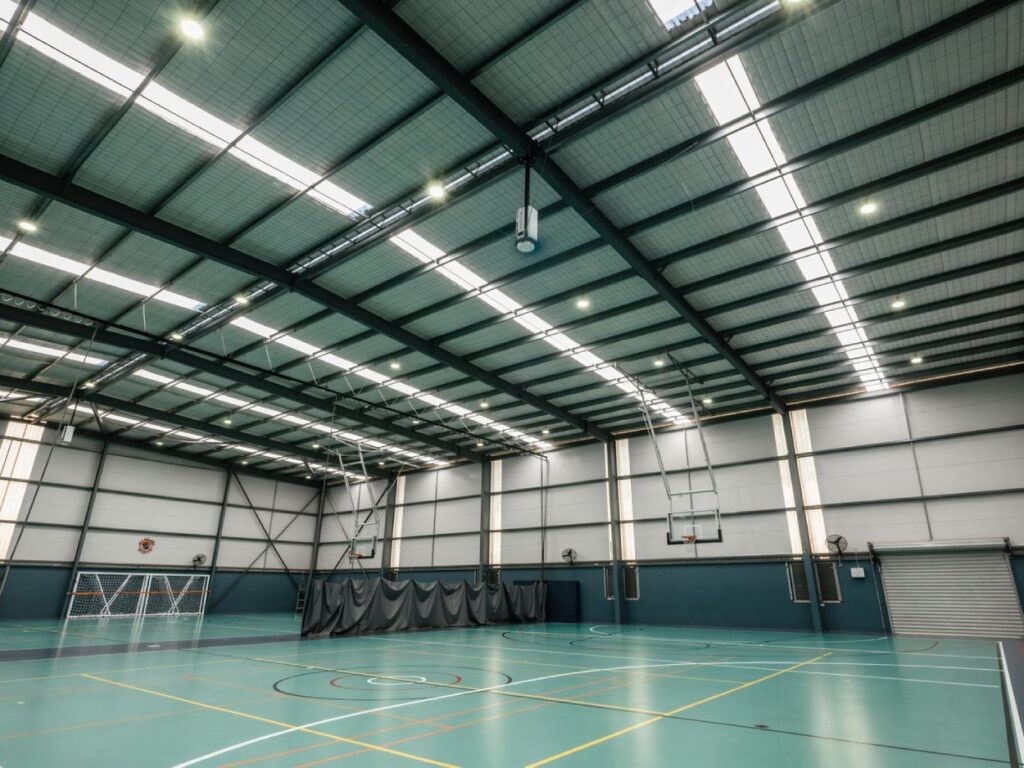
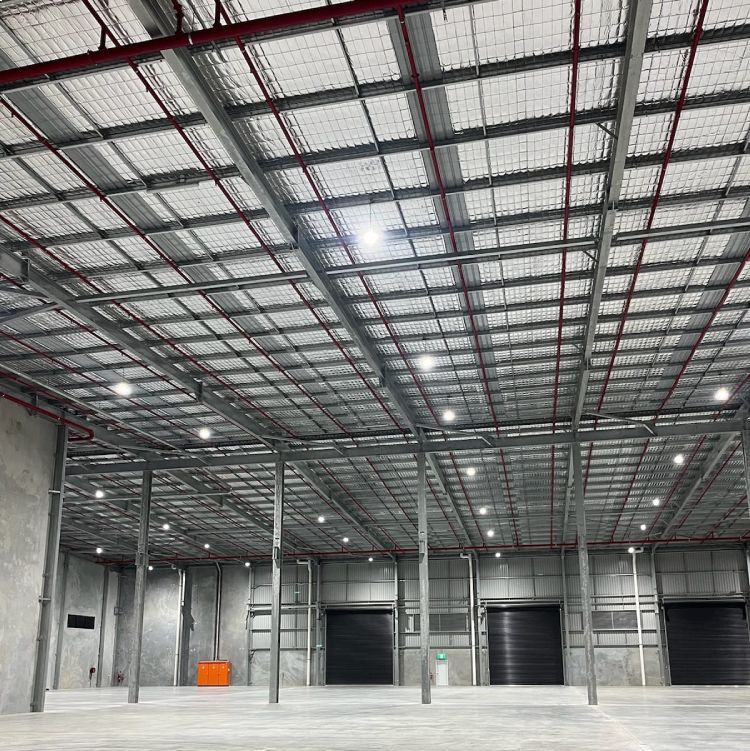
High bay lighting is appropriate for spaces with ceiling heights from approximately 6 metres up to 20 metres or more. Typical applications include warehouses, distribution centres, manufacturing facilities, large retail spaces and sports halls.
At these heights, a fitting must deliver enough lumens to achieve the required lux level at floor level. The greater the mounting height, the more lumen output is required to compensate for the inverse square law, which reduces light intensity as distance from the source increases.
High bay light mounting height also affects beam angle selection. Narrower beam angles, typically in the range of 60 to 90 degrees, are used at greater heights to concentrate light where it is needed. Using a wide beam angle at 10 metres or more results in excessive spread, poor lux levels at floor level and wasted energy.
Using a low bay fitting in a high ceiling space is a common mistake. The lumen output is insufficient for the mounting height, resulting in underlit spaces that fail to meet the required illuminance levels for the application.
Low Bay Lighting Height Requirements
Low bay lighting is suited to ceiling heights from around 3 metres up to 6 metres. Typical applications include workshops, smaller warehouses, retail spaces, mezzanine levels, car parks and commercial interiors.
At lower ceiling heights, the primary concern shifts from lumen output to light distribution. A fitting that is too powerful for a low ceiling will create glare and harsh hotspots directly below the fitting, with poor uniformity across the floor area.
Low bay LED fixtures use wider beam angles, typically 90 to 120 degrees or more, to spread light evenly across the space. This improves lighting uniformity in warehouses and other commercial environments where consistent illuminance across the work area is essential.
Fitting a high bay in a low ceiling application causes similar problems. The narrower beam angle concentrates light in a small area, leaving the surrounding space underlit, and the lumen output is often excessive for the mounting height, increasing energy consumption unnecessarily.
Beam Angle & Light Distribution Patterns
Beam angle is directly related to mounting height and is one of the most important factors in achieving good lighting uniformity.
At higher mounting heights, a narrow beam angle is required to deliver light intensity at floor level. The cone of light produced by a narrow angle fitting covers a smaller area but achieves higher lux values within that area, which is appropriate when fittings are spaced further apart in large open spaces.
At lower mounting heights, a wide beam angle distributes light across a larger area from a closer distance. This provides more even coverage between fittings and reduces the risk of dark spots or bright patches in the working area.
Beam angle selection should always be considered alongside fitting spacing. Using the correct mounting height with the wrong beam angle, or the right beam angle at the wrong spacing, can still produce poor results. Commercial lighting installation requires both factors to be calculated together to achieve the target lux level and uniformity ratio for the space.
Lumen Output & Efficacy Considerations
Lumen output requirements increase significantly with ceiling height. A fitting mounted at 10 metres needs considerably more lumens than one mounted at 4 metres to achieve the same lux level at floor level.
As a general guide, high bay fittings for industrial applications typically range from 10,000 to 50,000 lumens or more depending on mounting height and spacing. Low bay fittings generally range from 3,000 to 15,000 lumens.
Efficacy, measured in lumens per watt, is equally important. Energy efficient LED lighting with high efficacy delivers more light per watt of energy consumed, which directly reduces operating costs. For commercial and industrial applications where lights run for extended hours, efficacy is a key specification to evaluate alongside raw lumen output.
It is important not to over-specify lumen output at low ceiling heights. Excessive lumens at close range creates glare and discomfort, particularly in workspaces where people are present throughout the day.
When To Use High Bay Lights?
High bay lights are the correct choice when ceiling heights exceed 6 metres. They are the standard fitting for:
- Warehouses and distribution centres with racking systems
- Manufacturing and production facilities
- Large format retail and trade supply stores
- Logistics and freight handling facilities
- Indoor sports centres and gymnasiums
- Aircraft hangars and large workshops
In these environments, the combination of high lumen output, controlled beam angle and robust construction makes high bay LED fixtures the most practical and energy efficient solution for maintaining the required lux levels across large floor areas.
When To Use Low Bay Lights?
Low bay lights are the correct choice for ceiling heights between approximately 3 and 6 metres. Common applications include:
- Small to medium workshops
- Commercial retail and showroom fitouts
- Mezzanine floors and raised platforms
- Offices with high ceilings
- Car parks and basement levels
- Food processing and light manufacturing facilities
In these spaces, the wider beam angle and lower lumen output of a low bay fitting delivers consistent illuminance without the glare, energy waste or poor uniformity that would result from using a high bay at close range.
Common Installation Mistakes
Getting the fitting selection right is the starting point, but installation decisions also affect the outcome.
Using the wrong fitting for the ceiling height is the most frequent error, as covered above. Beyond that, contractors should also consider:
- Incorrect beam angle for the spacing – Even the right fitting type, used at the wrong spacing with the wrong beam angle, produces uneven illumination. A photometric design or lighting layout calculation should always be completed before specifying quantities.
- Ignoring the spacing-to-height ratio – This ratio determines how evenly light is distributed across a floor area. Fittings spaced too far apart leave dark zones between them. Fittings spaced too closely together create an uneven pattern with bright spots directly under each fitting.
- Overlooking the application environment – Dusty industrial environments, cold storage facilities and high-humidity spaces all require fittings with appropriate IP ratings and thermal performance. Specifying a standard fitting in a demanding environment leads to early failure and increased maintenance.
Why choose S-tech high bay & low bay LED products
S-tech supplies commercial and industrial LED fixtures designed for Australian conditions and the demands of trade-grade applications. High bay and low bay products in the S-tech range are selected and specified with mounting height requirements, beam angle performance and lumen efficacy in mind.
Products are engineered with quality LED drivers, appropriate thermal management and IP ratings suited to the intended environment. This translates to reliable, consistent performance over the long term, reducing maintenance requirements and providing electrical wholesalers and contractors with fittings that meet the needs of commercial and industrial projects.
S-tech’s experience in the Australian market means the product range reflects the ceiling heights, installation conditions and compliance requirements that contractors encounter on real projects.
Frequently Asked Questions
What is the difference between high bay and low bay lights?
High bay lights are designed for ceiling heights above 6 metres and use higher lumen output with narrower beam angles to deliver sufficient light at floor level. Low bay lights are designed for ceiling heights below 6 metres and use wider beam angles to distribute light evenly across shorter distances.
What height do you need for high bay lights?
High bay lights are generally suited to ceiling heights of 6 metres and above. Below this height, a low bay fitting with a wider beam angle will typically provide better lighting uniformity and avoid glare.
Can you use a high bay light at low ceiling heights?
Using a high bay fitting at low ceiling heights is not recommended. The narrower beam angle concentrates light in a small area, producing hotspots and poor uniformity, while the lumen output is often excessive for the mounting distance.
What beam angle should I use for high bay lighting?
For high bay lighting, beam angles of 60 to 90 degrees are typically used for mounting heights above 8 to 10 metres. At lower end high bay heights, around 6 to 8 metres, a wider angle in the 90 to 120 degree range may be appropriate depending on fitting spacing and the target uniformity.
Are high bay LED lights more energy efficient than low bay?
Efficiency depends on the efficacy of the specific product, not whether it is a high bay or low bay fitting. What matters is that the correct fitting is used for the ceiling height. Using an oversized fitting in a low ceiling space wastes energy, as does using an undersized fitting that fails to achieve the required lux levels with fewer, more spread-out fittings.