
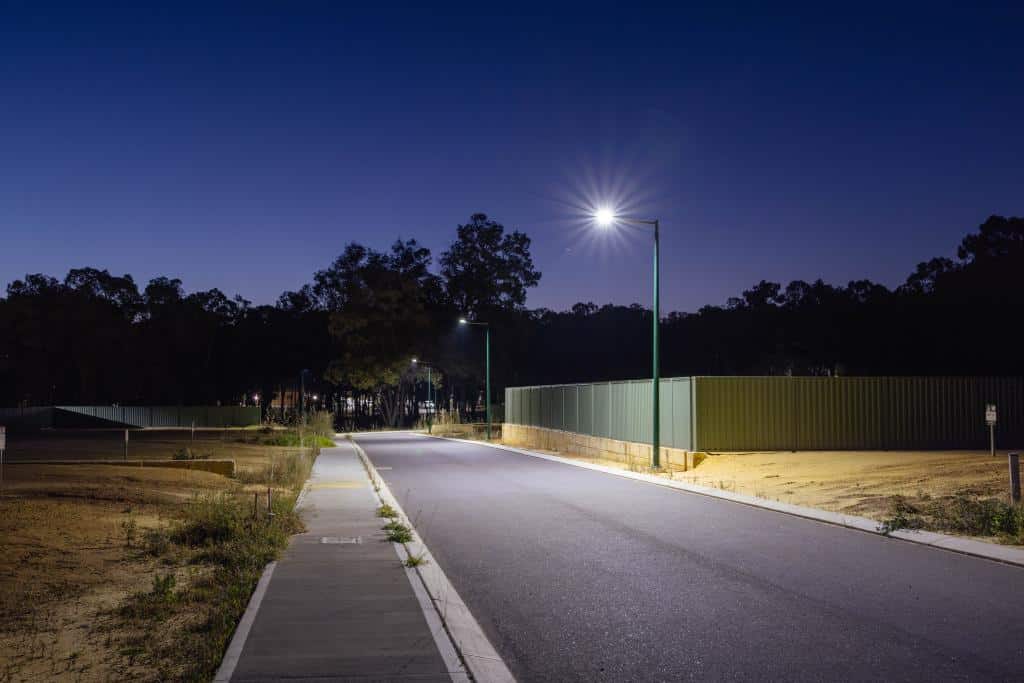
LED street lighting has become the preferred solution for councils, developers and infrastructure contractors across Australia. As older traditional street lighting reaches end of life, many projects now focus on upgrading to LED technology to improve energy efficiency, reduce operating costs and deliver more consistent lighting performance.
Understanding the advantages of LED street lights helps decision makers evaluate lifecycle cost, compliance requirements and long term asset performance rather than focusing only on upfront purchase price.
What Are The Advantages of LED Street Lights
The advantages of LED street lights extend beyond lower electricity bills. They include improved energy efficiency, longer lifespan, reduced maintenance, better light quality and greater control over light distribution.
When properly specified, LED street lights provide measurable performance improvements compared to metal halide lamps and other legacy systems, particularly in high use roadway and public space applications.
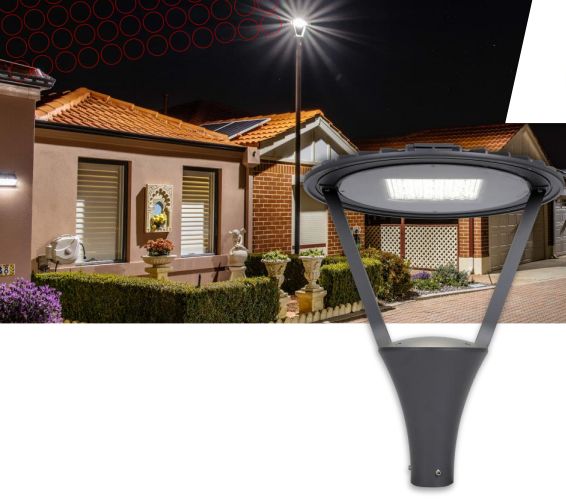
Energy Efficiency & Lower Energy Consumption
One of the primary benefits of LED street lights is significantly lower energy consumption. LED technology converts a higher percentage of electrical power into usable light output, reducing wasted energy as heat.
Compared to traditional street lighting such as metal halide lamps, LED fittings typically achieve higher lumens per watt. This directly reduces power consumption while maintaining or improving illuminance levels on the road surface.
Lower energy consumption translates into reduced operating costs across the life of the installation. For councils managing thousands of fittings, even modest wattage reductions per luminaire can result in substantial annual savings. Reduced electricity demand also lowers carbon emissions and supports environmental impact targets.
LED street lights energy savings are further enhanced when combined with smart control systems that allow dimming during low traffic periods.
Long Service Life & Reduced Maintenance
Long service life is another major advantage of LED street lights. High quality LED street luminaires are commonly rated for 50,000 hours or more, depending on operating temperature and driver quality.
In contrast, metal halide lamps experience lumen depreciation and require more frequent replacement. As traditional lamps age, light output reduces, leading to inconsistent illumination and additional maintenance interventions.
A longer lifespan reduces maintenance costs by minimising the frequency of lamp changes, traffic management requirements and elevated work platform access. For remote or regional installations, this reduction in maintenance can significantly lower total lifecycle expenditure.
Reduced maintenance also improves reliability. Fewer failures mean fewer dark spots and improved public safety.
Improved Visibility & Better Light Quality
LED street lighting delivers improved visibility through better light quality and more precise optical control.
Directional light output allows designers to focus illumination where it is required, rather than losing light above or outside the target area. This improves uniform light distribution across carriageways and pedestrian zones.
Reduced glare is achieved through controlled optics and appropriate colour temperature selection. Excessive glare in traditional street lighting can reduce visual comfort and create contrast issues for drivers.
LED luminaires also provide instant start with no warm up time. Unlike metal halide lamps, which can take several minutes to reach full output, LED fittings achieve full brightness immediately. This is particularly beneficial following power interruptions.
Colour temperature selection further influences perceived brightness and visual clarity. Appropriate selection ensures better light quality without over illuminating or creating harsh visual environments.

LED Vs Traditional Street Lights
When comparing LED vs traditional street lights, several performance differences become clear.
Energy efficiency
- LED luminaires deliver higher lumens per watt
- Metal halide lamps consume more power for equivalent light levels
Light quality
- LED fittings provide directional light output with uniform light distribution
- Traditional street lighting relies on reflectors and produces more wasted light
Maintenance
- LED systems offer longer lifespan and reduced maintenance
- Metal halide lamps require more frequent replacement and experience faster lumen depreciation
Operating costs
- Lower energy consumption reduces electricity expenditure
- Fewer lamp changes reduce labour and access equipment costs
Over time, the combined energy and maintenance savings typically outweigh the higher upfront cost of LED installations.
Replacing Street Lights With LED
Replacing street lights with LED involves more than simply matching wattage. Proper assessment should consider required illuminance levels, pole spacing, mounting height and roadway classification.
A common question is how many lumens should LED street lights be. The answer depends on the specific application, including residential streets, arterial roads or public spaces. Lumen output must be aligned with relevant lighting standards and design calculations rather than based solely on existing lamp wattage.
Electrical compatibility, surge protection and driver quality should also be evaluated during retrofit planning. A well planned upgrade ensures that energy efficiency gains are achieved without compromising performance or compliance.

LED Street Light Power Consumption
Understanding LED street light power consumption requires looking beyond nominal wattage.
Power consumption should be evaluated in relation to delivered lumens and optical performance. A lower wattage fitting that does not achieve required light levels may not provide true efficiency gains.
High efficacy LED luminaires deliver more usable light per watt, enabling designers to achieve compliant lighting levels with lower overall system demand. This balance between wattage and light output is central to maximising energy efficiency.
Thermal management and driver efficiency also influence real world performance. Quality components help maintain consistent output over the rated service life.
Smart LED Street Light Advantages
Smart street light advantages extend the benefits of LED technology further.
Integrated dimming, monitoring and remote control systems allow operators to adjust output based on time of day or traffic patterns. This reduces unnecessary energy use while maintaining safety.
Monitoring systems provide visibility over asset performance, identifying faults or degradation early. This supports proactive maintenance planning and improves overall reliability.
For large scale infrastructure projects, smart controls contribute to additional energy savings and improved asset management across the network.
Addressing LED Light Problems
Concerns around LED street lights problems often relate to glare, colour temperature selection or poor quality products. In most cases, these issues arise from incorrect specification rather than inherent technology limitations. Excessively cool colour temperatures, inadequate optical control or low quality drivers can negatively impact performance. Selecting appropriate luminaires with controlled optics, compliant light distribution and reliable components mitigates these risks. When properly designed and installed, LED street lighting provides stable, consistent and efficient performance.Why LED Street Lights Are The Preferred Long Term Solution
The advantages of LED street lights are not limited to lower electricity bills. When evaluated across energy efficiency, power consumption, lifespan and maintenance costs, LED technology consistently delivers stronger long term value than traditional street lighting. Reduced operating costs, improved visibility and better light quality contribute to safer and more reliable public lighting networks. Longer service life minimises disruption and ongoing maintenance expenditure, while lower energy consumption supports environmental objectives and carbon reduction targets. For councils, developers and contractors planning new installations or replacing street lights with LED, working with an experienced supplier is critical to achieving compliant and reliable outcomes. S-tech provides technical guidance and commercially focused LED lighting solutions that align with performance requirements and long term asset management goals.Frequently Asked Questions
What are the advantages of led street lights?
LED street lights offer improved energy efficiency, lower power consumption, longer lifespan and reduced maintenance costs compared to traditional street lighting. They also deliver better light quality, improved visibility and reduced environmental impact.
How many lumens should LED street lights be?
The required lumen output depends on the roadway classification, pole spacing and applicable lighting standards. A lighting design calculation should determine the appropriate lumens to achieve compliant illumination levels rather than relying solely on previous lamp wattage.