
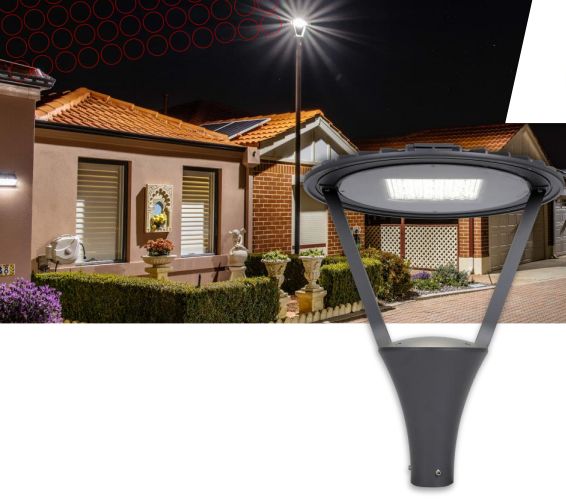
When evaluating street lighting for a new project or upgrade, the comparison is not solar versus LED as separate technologies. Modern solar street lights also use LED luminaires. The real decision is between solar powered street lights with integrated solar panels and battery storage, and grid connected LED street lights supplied by a traditional electricity network.
For contractors, councils and developers, the choice typically comes down to grid access, lighting performance requirements, installation costs, maintenance obligations and long term operating costs.
How Do Solar Streets Compare To LED Street Lights
The fundamental difference between solar and LED street lights lies in how power is supplied and managed. Grid connected LED street lights draw power from a stable electricity supply. This allows for consistent power output, predictable lighting performance and easier integration into existing urban infrastructure.
Off grid solar street lights operate autonomously. Solar panels generate energy during daylight hours, which is stored in battery storage systems and used to power the luminaire at night. Performance depends on system sizing, sunlight availability and battery capacity.
Installation Costs & Infrastructure Requirements
Installation costs are heavily influenced by site conditions.For grid connected systems, civil works such as trenching, cabling and network connection approvals are often required. In established urban environments where infrastructure is already present, this process can be straightforward. In new developments or remote sites, however, trenching and connection costs can increase quickly.
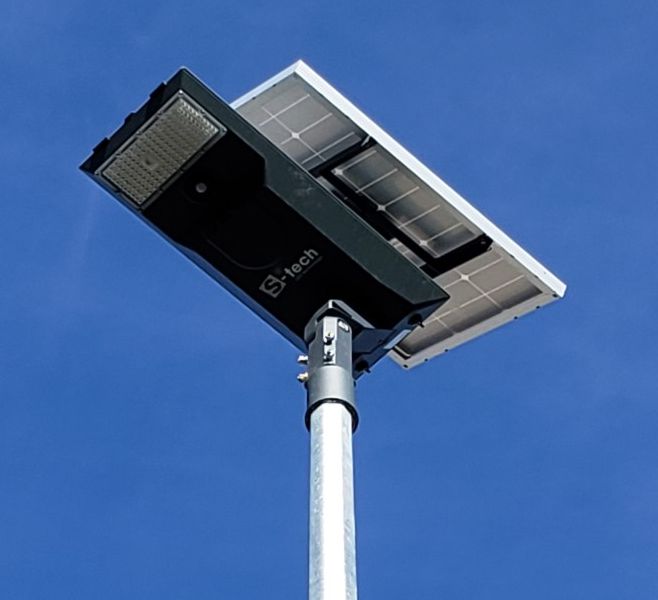
Solar street lights reduce the need for trenching and underground cabling. Each pole operates as a self contained unit with integrated solar panels and battery storage. This can simplify installation in remote locations or areas where civil works are disruptive or expensive. Correct orientation of solar panels and appropriate structural design remain critical.
Operating Costs & Energy Consumption
Operating costs differ significantly over the life of the asset. Grid connected LED street lights incur ongoing energy consumption costs through the electricity supply. These costs are generally predictable and can be calculated accurately for budgeting purposes.
Solar street lights eliminate electricity bills because they operate off grid. However, battery storage introduces a lifecycle cost. Batteries will require replacement at defined intervals depending on chemistry, usage cycles and environmental conditions. Long term cost planning must account for this.
Lighting Performance, Power Output & Backup Power
Lighting performance is often the deciding factor in commercial projects. Grid connected systems can deliver higher and more consistent power output, making them suitable for high traffic corridors, major roads and areas requiring strict compliance with lighting standards. Because they are not dependent on sunlight availability, output remains stable regardless of weather conditions.
Solar street lights must balance energy generation, storage and nightly consumption. Extended periods of low sunlight can reduce available energy unless the system is oversized. Well designed systems incorporate battery storage and intelligent controls to manage output, but they still operate within the limits of available solar resource.
Backup power in grid connected systems is typically managed at network level, while solar systems rely entirely on stored energy.
Maintenance Requirements
Maintenance profiles differ between the two approaches. Solar street lights require inspection and cleaning of solar panels to maintain efficiency. Battery storage systems must be monitored and replaced according to lifecycle planning. Environmental factors such as dust, heat and shading can influence performance and maintenance frequency.
Grid connected LED street lights avoid battery related servicing but still require routine inspection of drivers, electrical connections and luminaires. The power supply itself is maintained by the network provider, simplifying on site electrical maintenance.

When To Use & Not to Use Solar Street Lights
Solar street lights are well suited to remote locations where grid connection is impractical or cost prohibitive. They are effective in areas where trenching would disrupt infrastructure or where autonomous operation is preferred. Projects aiming to reduce carbon footprint or deploy lighting quickly without extensive civil works often benefit from off grid solutions.
They are less suitable in heavily shaded environments or regions with consistently low sunlight availability. Applications requiring high power output and guaranteed lighting performance, such as major arterial roads, may exceed the practical limits of solar based systems unless carefully engineered.
Solar Street Lights Are Suitable For | Solar Street Lights Are Not Suitable For |
Remote locations without grid access | Heavily shaded sites |
Areas where trenching is impractical or costly | Regions with consistently low sunlight availability |
Projects prioritising reduced carbon footprint | High power output requirements such as major arterial roads |
Rapid deployment or temporary infrastructure | Sites requiring guaranteed constant lighting performance |
When To Use & Not to Use LED Street Lights
Grid connected LED street lights are typically the preferred option in established urban environments with reliable electricity supply. They are appropriate for high traffic corridors, commercial precincts and areas where consistent lighting performance is critical. Access to stable power also enables integration with smart control systems and broader infrastructure networks.
They are less appropriate in remote locations without electricity supply, or where infrastructure requirements significantly increase installation costs. In such cases, extending the grid may outweigh the benefits of a connected system.
LED Street Lights Are Suitable For | LED Street Lights Are Not Suitable For |
Established urban environments with reliable electricity supply | Remote locations without grid connection |
High traffic corridors and major roads | Projects where trenching significantly increases installation costs |
Sites requiring consistent lighting performance | Sites where extending the grid is not commercially viable |
Projects integrating smart controls and network systems | — |
Solar Vs Grid Connected LED Street Lights At A Glance
While both solutions use LED luminaires, their suitability depends on power access, site conditions and performance expectations. The table below provides a practical comparison to support specification and procurement decisions.
Consideration | Solar Street Lights Off Grid | Grid Connected LED Street Lights |
Power source | Solar panels with battery storage | Electricity supply from the grid |
Grid dependence | Independent of grid connection | Requires existing or new grid connection |
Remote locations | Highly suitable | Generally unsuitable without major infrastructure works |
Urban environments | Suitable where sunlight availability is adequate | Highly suitable with established infrastructure |
Installation requirements | Minimal trenching, self contained poles | Trenching, cabling and network approvals may be required |
Operating costs | No electricity bills, battery replacement required | Ongoing energy consumption costs |
Lighting performance | Dependent on system sizing and sunlight availability | Consistent output independent of weather conditions |
High output roads | Limited unless carefully engineered | Well suited to high traffic corridors |
Maintenance profile | Solar panel cleaning and battery lifecycle management | Electrical component inspection, no battery replacement |
Street Light Solutions by S-tech
There is no universal winner between solar and grid connected LED street lights. The right choice depends on grid access, sunlight availability, performance targets, installation constraints and lifecycle operating costs.
A practical assessment of site conditions and compliance requirements is essential. As an experienced commercial LED lighting supplier, S-tech works with electrical wholesalers and contractors to specify street lighting solutions that match real world project demands, whether that means autonomous off grid systems or high performance grid connected installations.
Frequently Asked Questions
How does sunlight availability affect solar street light performance?
Sunlight availability directly influences how much energy solar panels can generate and store in battery storage. Extended cloudy periods or shading can reduce available energy unless the system is correctly sized.
What is the typical battery lifespan in solar street lighting systems?
Battery lifespan depends on chemistry, usage cycles and environmental conditions. In commercial applications, battery replacement is usually planned as part of a defined lifecycle maintenance schedule.
Which option usually has higher installation costs, solar or grid connected?
Installation costs depend on site conditions. Grid connected systems can become expensive where trenching and cabling are required, while solar systems may involve higher upfront equipment costs but reduced civil works.
Which option has lower long term maintenance requirements?
Both require maintenance, but the type differs. Solar systems require battery and panel servicing, while grid connected systems avoid batteries but still require routine inspection of electrical components and luminaires.