
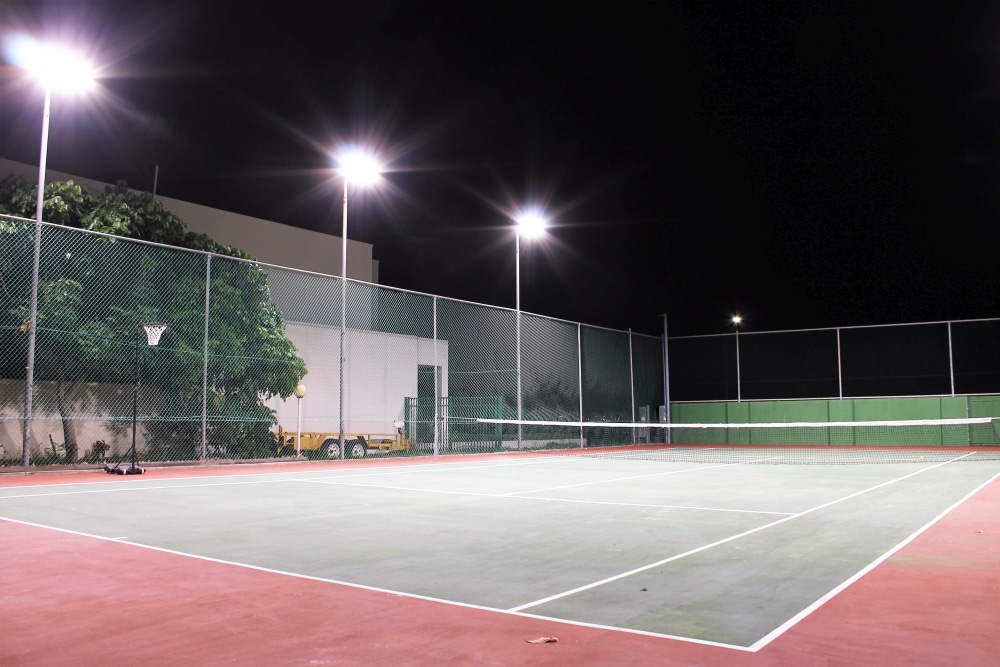
Flood lights are designed to illuminate wide outdoor areas where strong and consistent visibility is required. They are commonly used for building perimeters, construction sites, car parks, warehouses, loading zones and other large outdoor spaces where safety and visibility are important.
For many years, flood lighting relied on traditional lighting technology such as halogen flood lights and metal halide lamps. While these technologies were widely used, they often involved higher power consumption, shorter lamp lifespan and more frequent maintenance.
LED flood lights have since become the preferred option for many lighting installations. Understanding the differences between traditional flood lights and LED flood lights helps contractors and lighting designers select the right lighting solution for commercial and industrial environments.
What Is A Flood Light
A flood light is a high intensity light designed to illuminate large outdoor spaces. Unlike narrow beam lighting that focuses on a small area, flood lights spread light across a wide coverage zone.
This wide light distribution makes flood lights suitable for applications such as:
- security lighting around buildings
- construction sites and industrial yards
- car parks and loading areas
- sports fields and large outdoor spaces
Flood lights are typically mounted on walls, poles or building structures so the light can spread across a wide area using a suitable beam angle.
What Are The Different Types Of Flood Lights
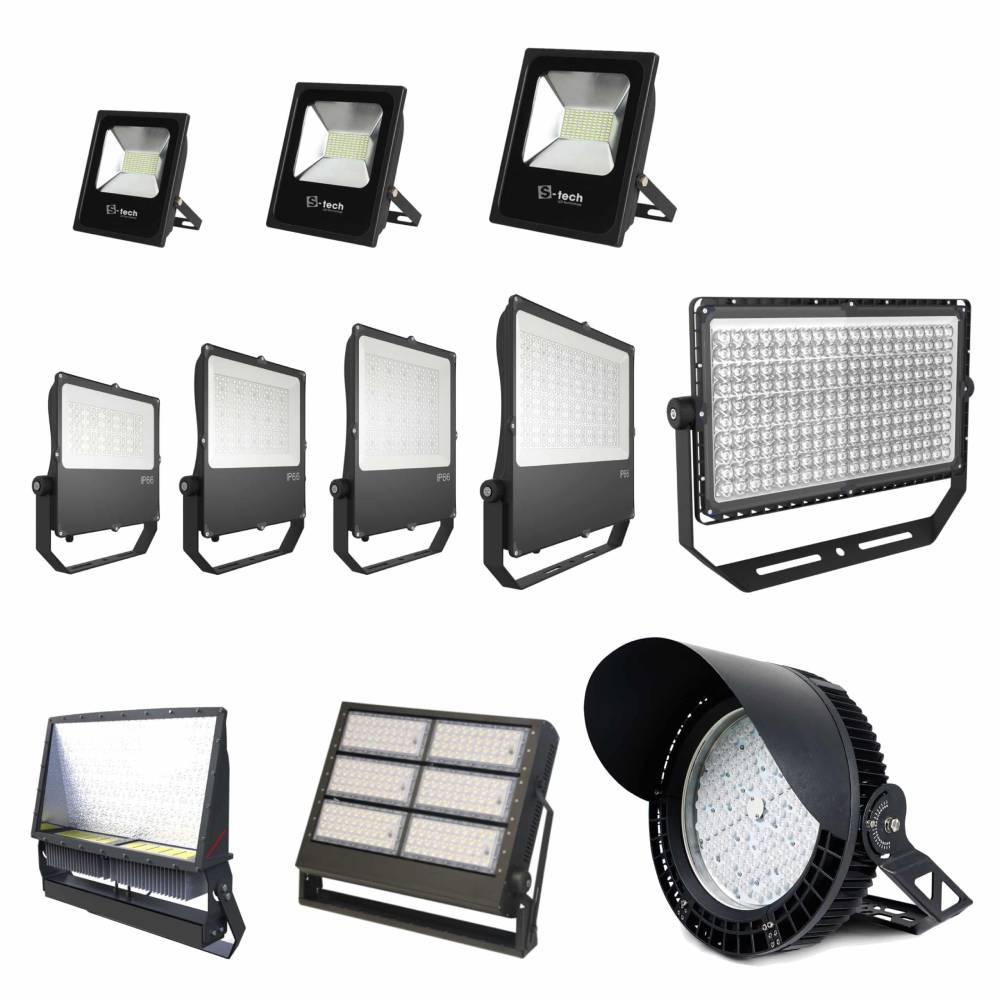
Flood lighting has historically used several types of lamp technology. These lighting systems differ in how they produce light, how much energy they consume and how long they operate before requiring replacement.
The most common flood light technologies include:
- Halogen flood lights
- Metal halide lamps
- LED flood lights
Traditional flood lights such as halogen and metal halide systems were widely used in outdoor lighting installations for many years. However, LED now dominate most modern lighting projects due to improvements in energy efficiency, light output and operating lifespan.
Traditional Flood Light Technology
Traditional lighting technology used in flood lights relies on lamps that generate light through heated filaments or gas discharge. These systems were effective for producing bright illumination but typically consumed large amounts of power and generated significant heat.
Traditional flood lights also tend to have shorter lamp lifespan and require regular maintenance. In many installations the lamps must be replaced periodically to maintain reliable light output.
Two of the most common traditional flood lighting technologies are halogen flood lights and metal halide lamps.
Halogen Flood Lights
Halogen flood lights produce light using a tungsten filament enclosed in a halogen gas filled bulb. When electricity passes through the filament it becomes extremely hot and produces visible light.
Halogen flood lights were commonly used for outdoor lighting due to their relatively strong light output and simple design. However, they are not particularly energy efficient and generate a large amount of heat during operation.
The lamp lifespan of halogen bulbs is also relatively short compared with modern LED lighting, which means more frequent replacement and increased maintenance requirements.
Metal Halide Lamps
Metal halide lamps are a type of high intensity discharge lighting often used in commercial flood lighting applications. These lamps produce bright light by passing an electrical arc through a mixture of gases and metal compounds inside the lamp.
Metal halide flood lights are capable of producing strong light output and have historically been used in large outdoor environments such as car parks, sports facilities and industrial sites.
However, metal halide lamps require a warm up time before reaching full brightness and typically experience gradual light output reduction as the lamp ages. This means lighting performance can decline over time, and lamp replacement becomes necessary to maintain consistent illumination.
LED Flood Lights
LED flood lights represent the modern alternative to traditional flood lighting technology. Instead of producing light through heated filaments or gas discharge, LEDs generate illumination using semiconductor technology.
As a result, modern flood lighting installations increasingly use LED fittings because they deliver reliable light output while reducing operating costs.
Why Use LED Flood Lights
LED floodlights are now widely used in commercial and industrial outdoor lighting because they deliver reliable light output while reducing operating costs.
Energy Efficiency & Power Consumption
One of the most significant advantages of LED flood lights is their energy efficiency. LED technology produces higher light output while consuming significantly less electrical power compared with traditional halogen flood lights or metal halide lamps.
Lower power consumption directly reduces operating costs, particularly in installations where lighting operates for long hours each night.
Over time, the energy savings achieved through LED lighting can be substantial, especially across large outdoor lighting installations such as warehouses, car parks or industrial facilities.
Lumen Output & Light Distribution
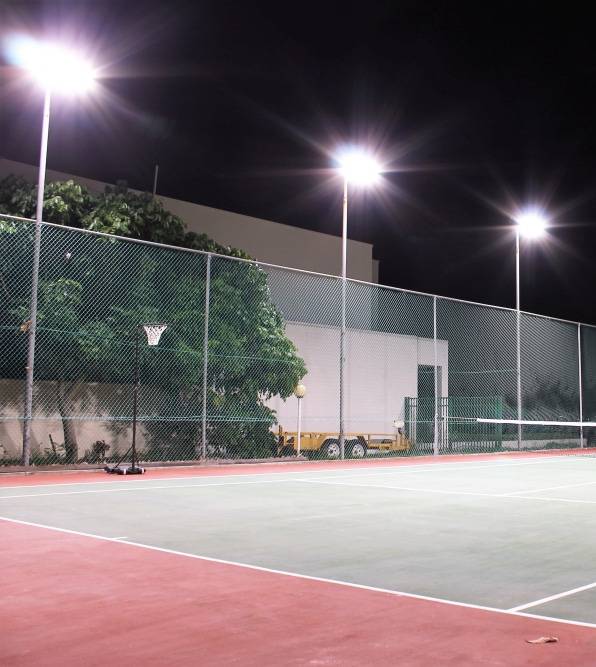
Lumen output measures how much visible light a fitting produces. Higher lumen output generally means brighter illumination across the target area.
LED flood lights are capable of producing strong and consistent lumen output while maintaining efficient power consumption. This allows large outdoor spaces to be illuminated effectively without excessive energy use.
Beam angle also plays an important role in flood lighting. A wider beam angle spreads light across larger areas, while narrower beams concentrate light on specific zones. LED floodlights offer a range of beam angle options, helping lighting designers control light distribution more precisely.
Operating Lifespan & Maintenance Requirements
Operating lifespan is another major advantage of LED flood lights. Traditional lamps such as halogen bulbs and metal halide require regular replacement due to shorter lamp lifespan.
LED lighting systems typically operate for far longer periods before replacement is required. This significantly reduces maintenance requirements, particularly in commercial environments where flood lights may be mounted high on buildings or poles.
Reducing maintenance requirements can also lower labour costs and minimise disruption in large outdoor lighting installations.
Heat Generation & Instant Start
- Traditional flood lights often generate significant heat during operation. Halogen flood lights in particular operate at high temperatures, which can reduce overall efficiency.
- Metal halide lamps also require warm up time before reaching full brightness after being switched on.
- LED flood lights operate differently. They produce far less heat and provide instant start illumination, reaching full brightness immediately when powered. This makes LED lighting particularly effective for security lighting and other applications where immediate light output is required.
Light Quality, Colour Temperature & Glare Control
Modern LED flood lights provide greater control over light quality and colour temperature. This allows installers to choose lighting that delivers clear visibility while maintaining comfortable lighting conditions.
Colour temperature influences how warm or cool the light appears. In outdoor environments, selecting the appropriate colour temperature can improve visibility and overall lighting performance.
LED lighting systems can also be designed to reduce glare and improve light distribution, helping create safer and more effective outdoor lighting environments.
Best Flood Lights For Commercial Use
For most modern commercial lighting installations, LED flood lights are typically the preferred option. Their combination of energy efficiency, long operating lifespan and reliable light output makes them well suited for large outdoor lighting applications.
Common commercial applications include:
- car parks and loading zones
- warehouses and industrial yards
- building exteriors
- construction sites and infrastructure projects
LED floodlights help reduce energy consumption while delivering strong illumination across large outdoor spaces.
S-tech supplies commercial grade LED lights designed for contractors and lighting professionals working across commercial and industrial projects. These fittings are engineered to provide reliable light output, efficient operation and long term performance in demanding outdoor environments.
Frequently Asked Questions
Do LED flood lights save more energy than traditional flood lights?
Yes, LED flood lights are significantly more energy efficient than traditional halogen flood lights or metal halide lamps. They produce higher light output while consuming less power, which helps reduce energy use and operating costs.
How long do LED flood lights last compared with halogen or metal halide lamps?
LED flood lights typically operate far longer than traditional lighting technologies. Their longer operating lifespan reduces the frequency of lamp replacement and lowers overall maintenance requirements.
Are LED flood lights suitable for large commercial outdoor areas?
Yes, LED flood lights are commonly used for large commercial and industrial outdoor spaces such as car parks, warehouses and building exteriors because they provide strong illumination with efficient power consumption.
Do LED flood lights produce less heat than traditional flood lights?
LED lighting produces significantly less heat compared with halogen or metal halide lamps. Lower heat generation improves efficiency and can help extend the lifespan of the lighting system.