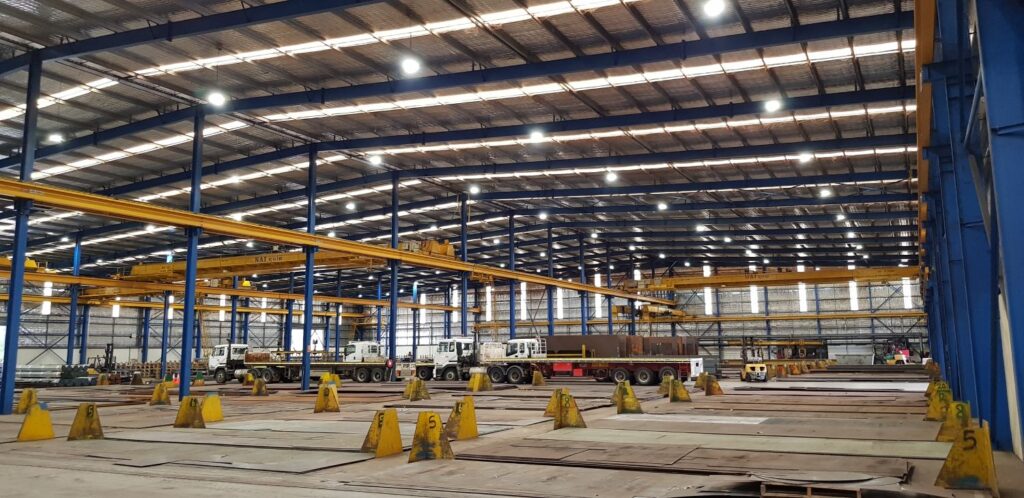
Walk into a poorly lit warehouse and you feel it immediately. Shadows down the racking aisles, harsh glare over the packing benches, staff squinting at labels. It is uncomfortable, inefficient and in many cases non-compliant.
The good news is that warehouse lighting has never been better or more accessible. LED technology has transformed what is possible: lower energy bills, longer life, less maintenance and significantly better light quality than the old fluorescent and metal halide systems most facilities are still running.
The challenge is knowing which products to use where. A warehouse is not one environment, it is several. And getting the right fitting into the right area makes all the difference.
Why Warehouse Lighting Requirements Are Different
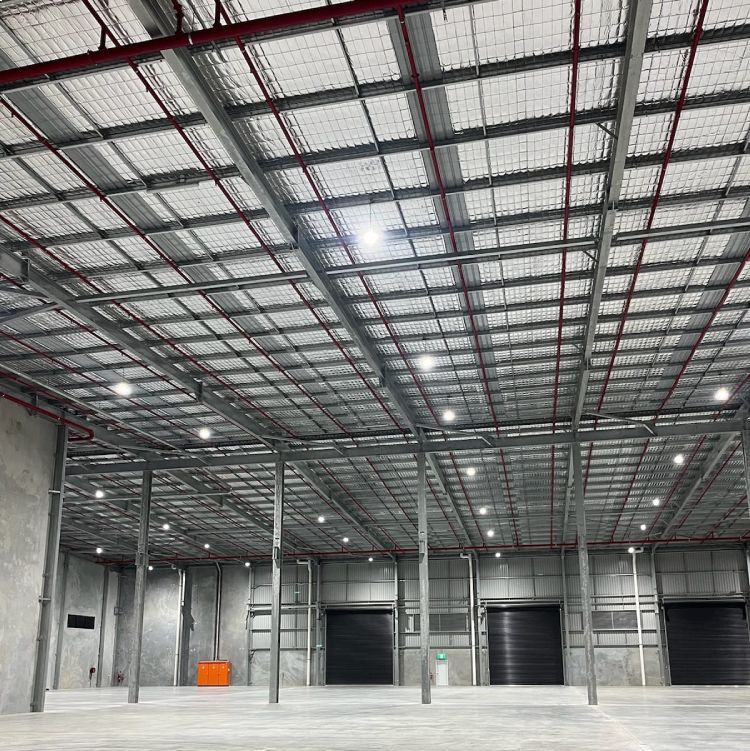
Most warehouses include a mix of spaces: high-ceiling storage and racking areas, lower-ceiling packing and dispatch zones, loading docks, cold storage rooms and often internal offices or amenities. Each one has different ceiling heights, different tasks being performed and different environmental conditions.
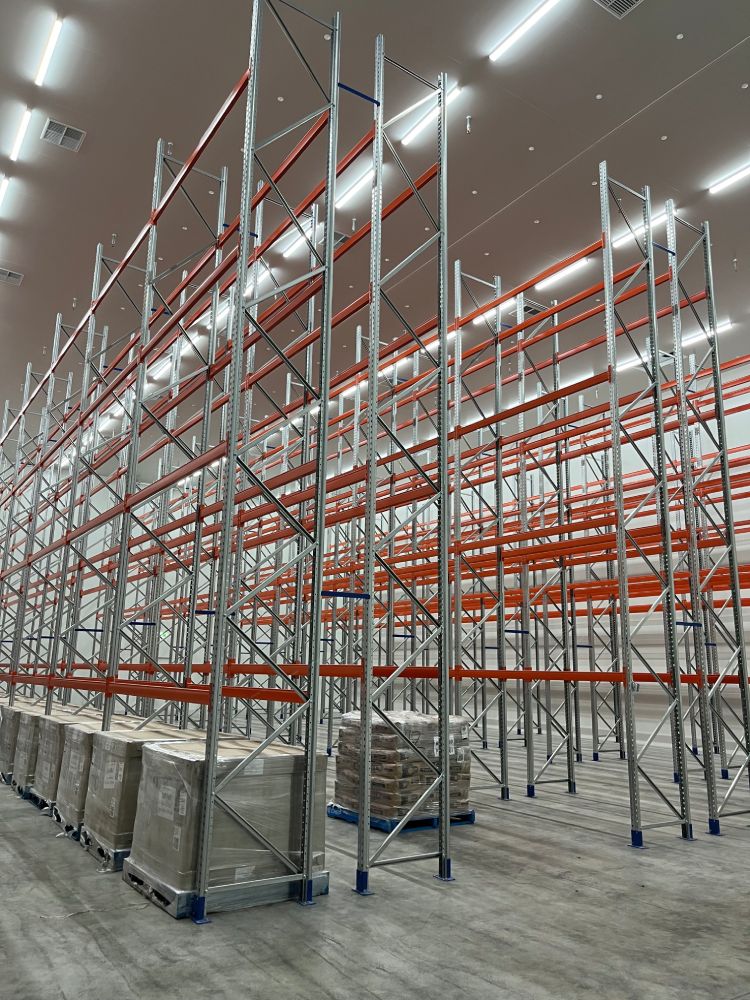
That variation drives the specification. A forklift aisle needs strong output and good vertical illuminance to read racking labels at height. A packing station needs higher lux levels and accurate colour rendering to support detailed work. A freezer room needs fittings that can handle sub-zero temperatures reliably.
Trying to cover all of that with one product never works. The right approach is zoned, matching the right fitting to each space.
What Type of Lighting is Used in Warehouses
High Bay Lights
For any area with a ceiling above 6 metres, high bay lights are the go-to solution. They are built to throw light down from height and still deliver the lux levels needed at floor level. Beam angles vary to suit the application: narrower for very high ceilings and tight racking aisles, wider for open floor areas where even coverage matters more than intensity.
For ceiling heights between 6 and 10 metres, fittings in the 10,000 to 20,000 lumen range are typically appropriate. Above 10 metres, output requirements climb and a proper photometric layout becomes important.
High bays come in two main formats:
- Linear high bays work well down long racking aisles, providing consistent illuminance along the aisle length
- Round high bays suit open work areas, general floor space and pick zones
Batten Lights
Batten lights are the practical choice for lower-ceiling areas within a warehouse, typically anywhere between 3 and 6 metres. Packing areas, dispatch zones, loading dock interiors and internal offices are all batten territory. In a mixed-height facility, battens cover the areas where a high bay would simply be over-specified.
Their linear format distributes light evenly, which is exactly what a workbench or conveyor line needs.
Common applications within a warehouse include:
- Packing and dispatch areas
- Loading dock interiors
- Internal offices and amenities
- Mezzanine levels
Flood Lights for External & Loading Areas
Loading docks, hardstand areas, vehicle access points and perimeter zones all need solid, reliable light, often well after dark. LED flood lights are the standard answer for external warehouse areas. They cover large open areas with broad, high-output illumination and use a fraction of the energy that older metal halide fittings consumed.
For covered external areas like loading dock canopies, weatherproof fittings with the right IP rating are essential. Beam angle and mounting height both need attention here, as glare for forklift and truck operators is a genuine safety issue.
LED Lights for Factories & Specialised Areas
Factory environments push the specification further than general storage areas. Production lines, QC stations and inspection areas need higher lux levels and better colour rendering than a standard racking aisle. When someone is checking product quality or working with fine tolerances, light quality matters.
Colour temperature is part of that:
- 5000 to 6500 Kelvin suits production, inspection and QC areas, sharpening visual acuity and supporting alertness
- 4000 to 5000 Kelvin works well for general factory floor and storage areas
- Warmer tones below 4000 Kelvin are better reserved for offices and amenities
Cold storage is its own category entirely. Standard LED fittings are not built for freezer environments. These spaces need fittings specifically rated for low-temperature operation, with sealed construction to handle condensation and reliable cold-start capability.
Other Warehousing Considerations
Lux Levels & Colour Temperature for Warehouses
Australian Standards set the floor on lux levels for different work environments. Key benchmarks to be aware of:
- General storage areas: minimum 160 lux at floor level
- Packing, dispatch and QC areas: 320 lux or more
- Loading docks: careful attention to both horizontal and vertical illuminance, particularly where vehicles are moving
Worth noting: these are minimums, not targets. Facilities that push above the minimum tend to see real benefits in safety, error rates and productivity.
For colour temperature, 4000 to 5000 Kelvin covers most warehouse applications well. It is a neutral to cool white that supports visibility and reduces eye fatigue across long shifts. Cooler temperatures suit inspection areas. Below 4000 Kelvin is generally not recommended for production or storage.
Lighting Layout Design for Warehouses
Before anything gets ordered, a lighting layout should be completed. It sounds basic, but it is regularly skipped, and the result is either an underlit facility or a project that has spent more than it needed to. Layout design works out how many fittings are needed, where they go, what beam angles to use and how to space them to hit the target lux and uniformity figures.
For larger or more complex sites, photometric software is the right tool. For simpler projects, manufacturer spacing guides and layout tools give a reliable starting point. Either way, doing the layout before specifying quantities saves time, money and rework.
Motion Sensor Lights & Energy Efficiency
Big warehouses have a lot of space that sits empty for much of the day, and racking aisles in particular are often accessed only occasionally. Motion sensor controls are a straightforward way to cut energy consumption in these zones. Fittings dim or switch off when no one is around, then come back up when needed. Integrated with LED high bays and battens, they can make a meaningful difference to the energy bill in facilities with variable traffic.
The key is matching the control strategy to the zone. Constantly occupied areas are better served by scheduled switching. Intermittent areas are where occupancy-based control earns its keep.
Across a large site, energy efficient lighting adds up fast. Combined with LED’s long service life and low maintenance overhead, a well-specified warehouse lighting installation is one of the better investments a facility can make.
Why Choose S-tech for Warehouse Lighting Solutions
S-tech supplies LED lighting across the full range of warehouse and industrial applications, including high bay lights, batten lights and flood lights. Everything in the range is specified for Australian commercial and industrial conditions, with the right lumen outputs, IP ratings and thermal performance for the environments these products actually operate in.
For wholesalers and contractors working on warehouse projects, S-tech delivers trade-grade product backed by over 20 years of experience in the Australian market. The range reflects what contractors encounter on real projects and is specified accordingly.
Frequently Asked Questions
What are the best lights for a warehouse?
It depends on the space. High bay LED lights are the standard for areas with ceilings above 6 metres. Batten lights suit lower-ceiling zones like packing and dispatch. External areas and loading docks need LED flood lights rated for outdoor use.
What lux level is required for warehouse lighting?
Australian Standards set a minimum of 160 lux for general storage areas and 320 lux or higher for packing, dispatch and quality control zones. These are minimums and many facilities benefit from specifying above them.
What colour temperature is best for warehouse lighting?
4000 to 5000 Kelvin suits most warehouse environments, providing a neutral to cool white that supports visibility and reduces eye fatigue. Cooler temperatures above 5000 Kelvin are better suited to inspection and QC areas.
When do warehouses need high bay lights?
Any warehouse with ceiling heights above 6 metres needs high bay lights to deliver adequate lux at floor level. Below 6 metres, batten lights or low bay fittings are the more appropriate choice.
Are LED lights worth it for warehouse lighting?
Absolutely. Lower energy consumption, longer service life and significantly reduced maintenance make LED the clear choice for warehouse applications. For facilities running extended hours, the savings are substantial.
Why use motion sensor lights in a warehouse?
Motion sensors work particularly well in racking aisles and other intermittently accessed areas. They cut energy consumption by dimming or switching off fittings in unoccupied zones without disrupting operations where people are working.