
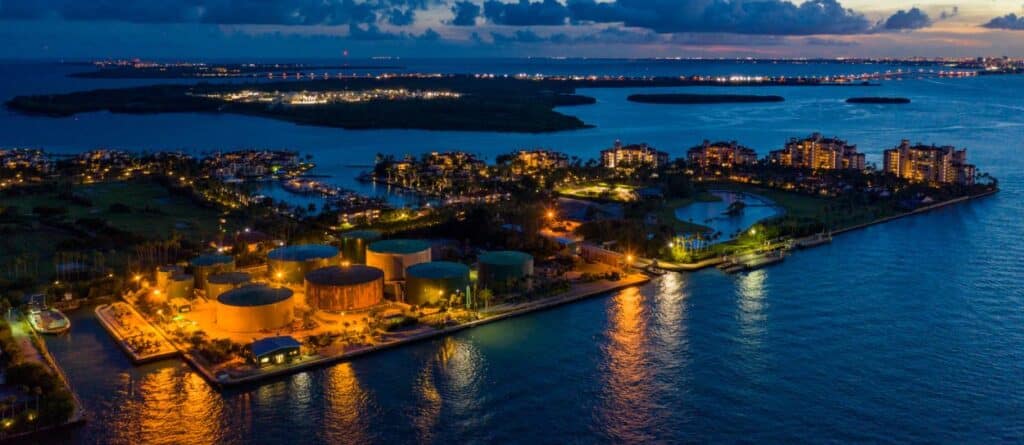
Turtle friendly lighting is becoming a standard requirement on coastal projects across Australia, and it affects a wide group: councils, developers, contractors and the specifiers who select the fittings. Two questions decide whether it applies to a given site: when does artificial light become a problem for marine turtles, and where is compliant lighting actually required? This article works through both, along with the applications and design principles that matter in practice.
What Is Turtle Friendly Lighting?
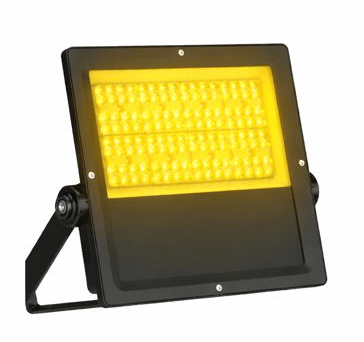
Turtle friendly lighting is a form of wildlife friendly lighting: low-intensity, long-wavelength amber LED lighting that is shielded and directed to keep light off nearby beaches. The problem it solves is spectral. Marine turtles and hatchlings are highly sensitive to the blue light spectrum and to white light, both of which can disorientate them, while they respond far less to longer wavelengths towards amber and red. Turtle friendly fittings use that principle, pairing an amber wavelength with shielding and careful aiming so the light serves people without drawing turtles off course.
When Does Artificial Light Affect Marine Turtles?
Artificial light becomes a problem when three things line up: proximity to a nesting beach, the nesting and hatchling season, and light in the blue and white part of the spectrum.
Nesting turtles prefer dark stretches of coast, and bright or blue-rich light can deter them from coming ashore. Hatchlings are affected more directly. They find the sea by moving towards the brightest, lowest horizon, which is naturally the ocean, and artificial light behind the beach can draw them inland instead, where they are exposed to exhaustion, dehydration and predators. Because the risk peaks during nesting season and close to the beach, both timing and location determine how significant a lighting installation is.
Where Turtle Friendly Lighting Is Required In Australia
The requirement is triggered near important nesting beaches and protected habitat rather than applying everywhere on the coast. Several frameworks sit behind it.
- National Light Pollution Guidelines for Wildlife – the Commonwealth guidelines set out a best practice framework for assessing and managing artificial light near marine turtles, seabirds and migratory shorebirds, including an environmental impact assessment approach around important nesting beaches.
- The EPBC Act – marine turtles are listed threatened and migratory species, and it is an offence to kill, injure or take them. Where a project could have a significant impact on listed species or their important habitat, obligations under the Act apply.
- State and local planning controls – these add site-specific requirements, for example Queensland’s Sea Turtle Sensitive Area provisions, which can set lighting conditions through the planning process.
For anyone specifying lighting on a coastal project, the practical point is that turtle friendly lighting may be a condition of approval, so it should be confirmed early rather than treated as an optional upgrade.
Applications Of Turtle Friendly Lighting
The settings where turtle friendly lighting is used map closely to the projects contractors and specifiers already work on:
- Coastal streets and car parks – councils have replaced standard streetlights and car park lighting near nesting beaches with amber, often motion-activated, fittings.
- Foreshore pathways and public amenities – pedestrian paths, boardwalks and public toilets along the foreshore, often using low, shielded amber bollard lighting.
- Beachfront resorts and holiday parks – car park, pathway and landscape lighting retrofitted to low-spill amber.
- Coastal residential developments – external, pathway and security lighting on apartments and housing near the coast.
- Ports, jetties and coastal industrial facilities – marine terminals, jetties and processing sites that need to maintain safe working light while meeting wildlife requirements.
Best Practice Design Principles
The accepted approach is often summarised as keep it long, keep it low and keep it shielded:
- Keep it long – use long-wavelength amber light rather than white or blue-rich sources.
- Keep it low – use the lowest intensity that still meets the safety and visibility needs of the space.
- Keep it shielded – shield fittings and direct them downward so light does not spill towards the beach or add to sky glow.
Applied together, these principles protect nesting turtles while still giving people the light they need.
Adaptive controls add a further layer. Dimming and motion sensors allow a light to stay off or dimmed until a person is present, cutting light spill during the hours it is not needed, which also reduces energy use.
How To Specify Turtle Friendly Lighting
Specifying compliant lighting comes down to a few decisions:
- Choose true amber sources suited to wildlife requirements rather than simply selecting a warm white fitting.
- Control intensity and spill by matching output to the task and avoiding over-lighting.
- Shield and aim fittings so light is directed downward and away from the beach.
- Confirm the site’s compliance requirements early, since planning conditions and the proximity of nesting habitat determine what is acceptable.

Why Choose S-tech For Turtle Friendly Lighting
As Australian leaders in LED technology, S-tech offers a dedicated turtle safe range designed for the demands of Australian coastal and industrial projects. The products combine the amber wavelength, low intensity and shielding that wildlife-sensitive sites require, while still delivering the visibility and reliability these applications depend on.
With extensive experience in the Australian market, S-tech can help match turtle friendly lighting to the requirements of each site, from coastal councils and foreshore developments to ports and industrial facilities near nesting beaches.
Frequently Asked Questions
Is turtle friendly lighting a legal requirement in Australia?
It can be, depending on the location. Near important nesting beaches and protected habitat, turtle friendly lighting may be required through the EPBC Act or state and local planning conditions. The National Light Pollution Guidelines for Wildlife set out how light should be assessed and managed in these areas.
How close to a nesting beach does lighting need to be turtle friendly?
There is no single distance, as it depends on the site, the terrain and whether light is visible from the beach. Any lighting that could be seen from a nesting beach is generally treated as a concern. A site assessment is the reliable way to determine what is required.
What do the National Light Pollution Guidelines require?
The guidelines provide a best practice framework for managing artificial light around wildlife, including marine turtles. They recommend assessing the impact of lighting near important nesting beaches and applying measures such as long-wavelength light, low intensity and shielding. An environmental impact assessment approach is recommended for significant sites.
Does the EPBC Act apply to coastal lighting projects?
It can, because marine turtles are listed threatened and migratory species under the Act. Where a coastal project could have a significant impact on these species or their important habitat, obligations under the Act may apply. Projects that are unsure are encouraged to seek advice early.
Where is turtle friendly lighting used?
It is used on coastal streets and car parks, foreshore pathways and public amenities, beachfront resorts, coastal residential developments, and ports, jetties and industrial facilities near nesting beaches. In each case the aim is to maintain safe, usable light while reducing the impact on turtles.
What colour temperature counts as turtle friendly?
Turtle friendly lighting relies on long-wavelength amber light rather than a standard white colour temperature. Amber sources sit at the long end of the spectrum, which marine turtles are least sensitive to. Warm white on its own is not a substitute, as it still contains blue light.